The Digital Alibi: How forensics can prove innocence too
Kawempe, Kampala. February 2025.
A junior IT officer at a logistics company is escorted out by security. He is been accused of altering delivery records to cover up a UGX 120 million fuel fraud. His manager swears she saw him on the office CCTV, working “past midnight,” the same night the fake entries appeared in the system.
The HR team is already drafting his termination letter.
But something does not sit right.
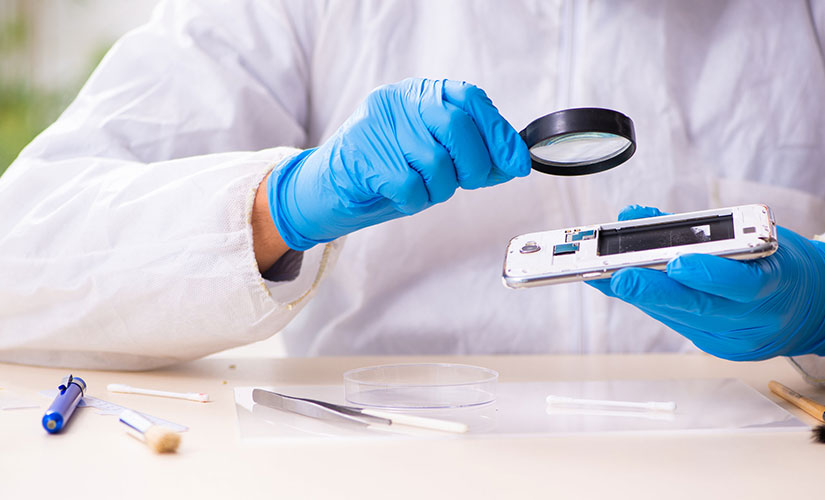
Summit Consulting Ltd is called in for a digital forensics review.
Twelve hours later, the entire story collapses.
Why?
Because the same digital footprints used to convict fraudsters can also clear the innocent.
Welcome to the overlooked side of cyber investigations: the digital alibi.
The myth of “guilty until forensics says otherwise”
In Uganda, the word “investigation” often means finding someone to blame.
We see it every month, junior officers used as scapegoats while the real fraudsters sip single malt with board members.
But digital forensics does not care about rank. It does not follow office gossip.
It follows evidence.
And sometimes, the truth is this:
He did not do it. The system lied. Or someone made it lie.
Case study: The fingerprint that wasn’t
In late 2024, a district SACCO in Masaka suffered a UGX 57 million theft through fraudulent loan approvals.
The system logs pointed to an accountant who had logged in at 1:23 AM. Fingerprint match confirmed. Case closed.
But when Summit Consulting Ltd stepped in, we did not just look at the logs.
We dug deeper:
- Access logs: Yes, the system was accessed. But the login came from an IP address linked to the branch manager’s home router.
- Biometric replay attack: We discovered the fingerprint scanner had a firmware vulnerability. With an old fingerprint image file, access could be spoofed.
- Windows event logs: Showed that the accused’s work computer was powered off at the time of the alleged access.
Conclusion?
The fingerprint was his. The act was not.
A replayed biometric and physical proximity deception had framed him.
Digital forensics proved his innocence.
He was reinstated with an apology, and the actual culprit was arrested weeks later.
The silent witness, your devices
Most people forget, your devices are always watching.
Your phone, laptop, and smartwatch are constantly recording:
- Locations
- App usage patterns
- Logins and logouts
- File creation and deletion times
- Power on/off events
This is the new truth serum.
And when false accusations fly, your only hope may be what your digital footprint says when you were not looking.
Case in point: The WhatsApp exoneration
In 2023, an employee at a health NGO in Mbale was accused of leaking confidential funding documents to a competing organization.
Emails had been leaked. Screenshots were circulating.
He denied everything. No one believed him.
Summit Consulting pulled his phone data, cross-referenced app usage, and matched WhatsApp chat timestamps.
Here is what we found:
- At the time of the leak, the suspect’s phone was in airplane mode and had not connected to the internet for 7 hours.
- The documents were sent via Telegram, a platform he had never installed.
- Device sync logs proved the alleged screenshots were created using a different phone model than his.
He was innocent. The real leaker? A former intern who had retained login access post-exit.
The byte trail cleared the accused. And nailed the real criminal.
What forensic alibis can prove
| Claim | Forensics can prove… |
| “He sent the email.” | Device used, IP address, login time, geolocation |
| “She altered the file.” | Timestamps, file hash changes, edit logs |
| “He accessed the system at night.” | MAC address, login session traces, CCTV sync |
| “She deleted the evidence.” | Recovery of deleted files, user access logs, and device control history |
| “He was present in office.” | Wi-Fi connection logs, badge access logs, camera timecodes |
What leaders must understand: Blame ≠ Proof
Too many managers make this mistake:
- They trust verbal reports over system logs.
- They rush to discipline without a forensic timeline.
- They assume “presence” means “guilt.”
But guess what?
Presence can be faked.
Fingerprints can be replayed.
Emails can be spoofed.
If you are not forensically equipped, you might be jailing the innocent and freeing the fraudster.
How Summit Consulting builds a digital alibi
- Device imaging. We do not work on the original device. We make a bit-by-bit clone. This preserves the chain of evidence.
- Timeline reconstruction. Every click has a time. We recreate a minute-by-minute timeline of events: when the file was opened, modified, sent, or deleted.
- Environment mapping. We check what networks the device connected to, which accounts were used, and whether usage matched the accused person’s patterns.
- Cross-device correlation. If the evidence exists on multiple devices, we prove whether the accused had access or not. Many people are blamed for files they never saw.
- Presentation to HR, legal, and board. We translate the digital evidence into plain English so decision-makers don’t punish based on hearsay.
Digital forensics does not take sides. It reveals the truth.
Sometimes that truth convicts.
But sometimes, just sometimes, it rescues.
In a world where systems can be manipulated and logs can be misinterpreted, bytes may be your only defender.
So before you fire that employee…
Before you blacklist that name…
Before you throw a career away…
Ask the question:
What does the data say?
Because in this new era, your alibi is already saved on a server somewhere.
All you need is someone who knows where to look.
Suspect you have been wrongly accused? Need to verify a staff claim or audit an incident with truth and fairness?
Call Summit Consulting Ltd. because sometimes, digital forensics is not about catching a thief. It is about saving an innocent life.

You may also like
Strategic shield: Aligning cybersecurity risk priorities across the board