

Why profitable banks still tolerate unproductive cultures
A profitable bank with an unproductive culture is like a luxury bus descending a hill with weak brakes. The passengers admire the speed. The driver celebrates progress. Nobody asks whether the engine is creating momentum or gravity is doing the work.
I have seen this repeatedly while facilitating strategy sessions with bank executives. Profits rise, the board applauds, and weak habits survive. Meetings begin late. Decisions remain open. Managers protect departments. Staff waits for instructions. Customer complaints circulate without ownership.
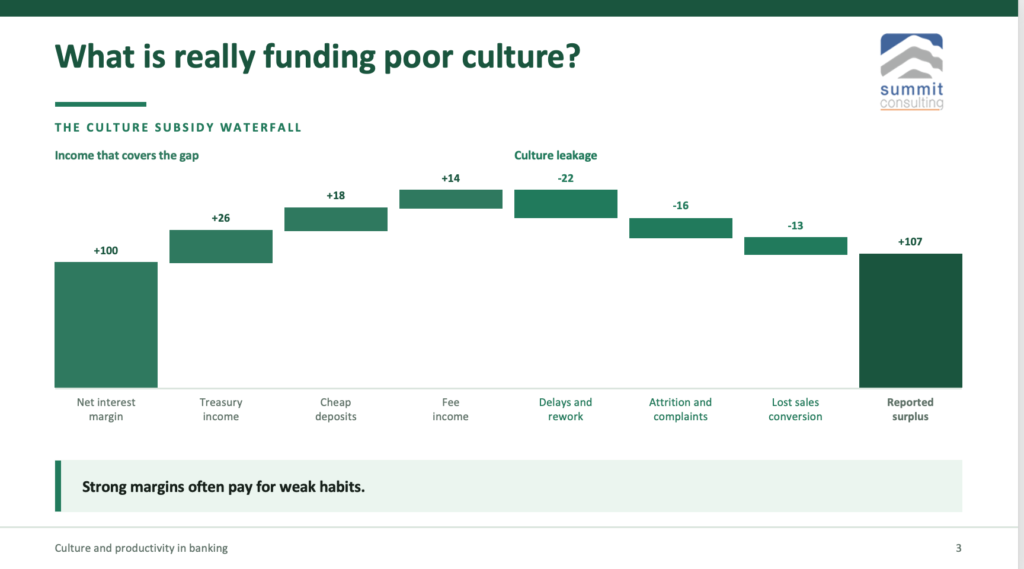
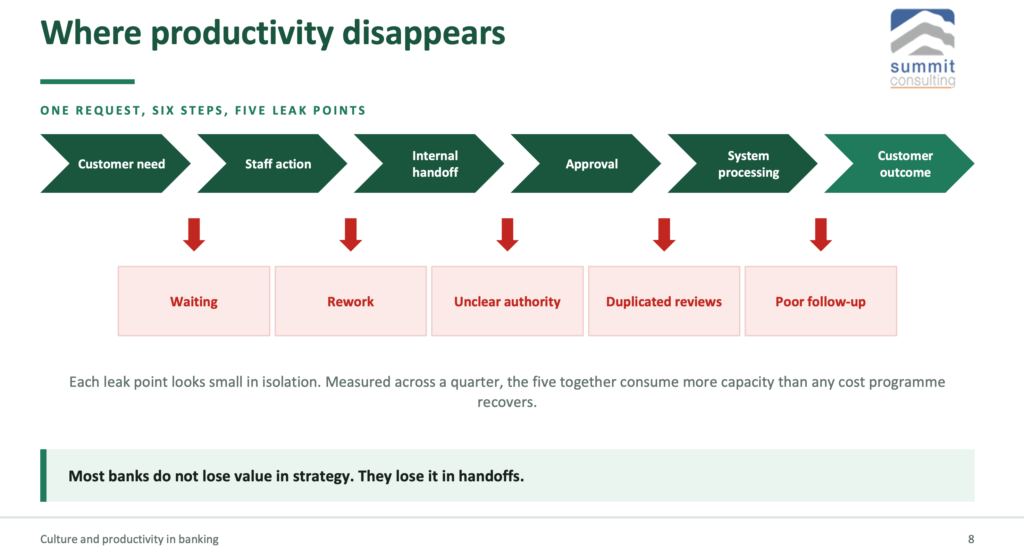
Profit can hide cultural failure.
Banks may remain profitable because of high interest margins, treasury income, market concentration, cheap deposits or a favourable credit cycle. These factors can compensate for slow service, duplicated roles, poor accountability and weak sales productivity. The income statement looks healthy while the operating model becomes expensive. Some banks have the advantage of a large moat that they may continue to succeed despite the inefficiency.
The warning signs appear quietly. Cost-to-income deteriorates. Revenue per employee stagnates. Turnaround times increase. High performers leave. Non-interest income remains weak. Technology investments produce limited adoption. Eventually, the bank discovers that yesterday’s profitability was financing today’s complacency.
Culture must therefore be measured financially, not emotionally.
I advise senior management teams and boards to use a simple Culture Productivity Test. Compare revenue per employee, cost per transaction, decision turnaround time, customer attrition, digital adoption and execution of strategic actions. Then assign an owner, target, and ninety-day correction plan to every material gap.
A profitable bank should not ask, “Are we making money?” Instead, it should ask: “How much more value would this institution create if every capable person performed at full strength?”
Profit is not proof of a strong culture. Sometimes it is merely the cushion delaying the consequences.
I remain, Mr Strategy

You may also like


Cyber Hygiene for Non-Tech Staff