
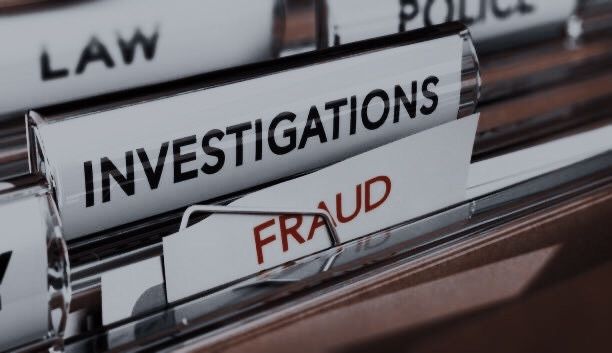
Why fraud examiners and investigators tend to be lonely
The case fell apart in the final stretch, not because the facts were weak, but because a witness who had sounded confident in the interview room suddenly became selective in memory, a senior executive who had privately demanded decisive action began speaking the language of caution, and a colleague who had praised the rigor of the investigation quietly asked whether the matter could be “handled internally for the good of the institution.” That is when younger investigators learn the profession. Fraud examination is not lonely because investigators dislike people, but because truth has poor social skills.
The organisation in question looked healthy from the outside. Clean offices, good branding, public confidence, and a digital transformation programme everyone was proud of. Inside, something was bleeding through vendor payments linked to a technology modernization initiative. Small amounts at first, too small to trigger panic, then patterns emerged, duplicate invoices with minor alterations, banking details changing without credible escalation, supporting documents that looked legitimate until someone examined metadata, font substitutions, creation timestamps, and document revision traces.
The internal auditor, a composed woman with sharp observational skills, noticed something that ordinary people often ignore. Three invoices from supposedly different vendors had identical PDF production signatures, same document generator, embedded author tag, and compression pattern. That was the hairline crack.
A digital forensics review expanded the picture. Email header analysis showed routing inconsistencies, reply paths differed from visible sender identities, login telemetry suggested one compromised mailbox had been accessed through anomalous authentication behavior inconsistent with the staff member’s normal usage pattern. Vendor onboarding records showed suspicious timing. Approval sequencing was unusually compressed, and a staff member who usually asked questions had approved without challenge.
Then the social weather changed. The moment suspicion moves from theory to human beings, loneliness enters because fraud investigation is not accounting but structured disappointment.
Courts continue to place value on evidential discipline, authenticity, and procedural integrity, particularly where electronic evidence is concerned, which means investigators who contaminate digital trails, rely on screenshots without provenance, or fail to preserve original records damage their own case before defence counsel says a word.
That legal reality shapes investigator behavior. You become careful with words, assumptions, friendship, internal politics, and people interpret caution as distance. That is how the isolation begins.
People stop speaking freely around you
Put yourself in the office canteen. Conversation changes when you arrive, the joke pauses, the side glance appears, someone lowers their voice, not because you are dangerous in a dramatic sense, but because investigators change the emotional economics of casual conversation. Most professionals live by relational shortcuts, trust, familiarity, and shared assumptions. Investigators are trained to test narratives, verify records, examine inconsistencies, and separate what was said from what can be proven.
That habit does not switch off neatly. A good fraud examiner listens differently. When someone says, “I always follow procedure,” the investigator quietly translates that into a testable statement.
When someone says, “Everyone knew,” the investigator asks who exactly. When someone says, “It was obvious,” the investigator asks obvious to whom. That mental posture is useful professionally and awkward socially. A locksmith eventually notices weak doors everywhere, a surgeon notices poor hygiene in restaurants, an investigator notices story gaps.
Learn disciplined compartmentalization. Professional skepticism is a tool, not a permanent personality.
Truth rarely makes you popular
The board may request an investigation; management may authorize the review, Legal may approve the scope, HR may support the process, then evidence starts pointing toward someone influential.
Watch the room change. The executive who demanded speed asks for balance. The manager who praised rigor asks whether reputational considerations should be weighed. A stakeholder suddenly raises procedural fairness concerns after ignoring them for months.
That does not mean the concerns are invalid. Fairness matters deeply, but seasoned investigators learn something difficult. Many people love investigation as an abstract principle until evidence becomes expensive. This creates professional loneliness because investigators are often standing between institutional convenience and evidential reality.
A barrister testing your work will not care that leadership felt uncomfortable. The court will care whether your evidence is authentic, preserved, attributable, and fairly obtained. That is why experienced investigators sometimes seem emotionally detached. They are not detached, but they are protecting the case.
You see what others miss, and that changes you
The average employee reads an email.
An investigator reads the sender path, linguistic style, urgency framing, timing, recipient structure, and attachment behavior. The average manager sees a payment approval, an investigator sees control bypass, authority exploitation, and evidence generation points. The average executive sees a missing laptop, a digital investigator sees credential exposure, cached tokens, cloud synchronization risk, remote persistence, browser artifacts, and potential lateral movement.
Technology has made this sharper. A deleted WhatsApp thread may still leave cloud artifacts, a USB insertion event can leave operating system traces, PDF metadata can expose authorship patterns, email transport headers can reveal routing anomalies, browser history reconstruction can expose access chronology, and mobile device logs may show application interaction timing.
Even absence can be evidence. A suspect claiming not to have opened a document while endpoint telemetry suggests interaction is not a philosophical disagreement.
It is a factual contradiction. This knowledge changes how you experience ordinary life as you stop trusting surface narratives. That can be isolating unless balanced with emotional maturity.
Confidentiality creates distance
A priest carries confessions, investigators carry institutional secrets. That difference matters. You may know why someone resigned, why a cyber breach was worse than publicly stated, why an internal theft narrative is incomplete, why an executive narrowly escaped a fraud event.
You often cannot discuss it. That silence creates social separation. Friends interpret discretion as coldness, colleagues interpret non-disclosure as arrogance, and family members wonder why you seem mentally elsewhere.
Confidentiality is not merely professional etiquette, it is often a legal and evidential necessity. Loose conversation can taint witness recollection. Premature disclosure can prejudice proceedings. Careless commentary can create defamation exposure. Evidence handling failures can undermine admissibility. So investigators become quieter, not because they lack stories but because the stories are locked.
You are professionally trained to doubt
Doubt is misunderstood, not cynicism, disciplined verification but repeated exposure to deception reshapes human expectations. The fraud examiner interviews a cooperative witness who later contradicts earlier statements. The cyber investigator hears, “I clicked nothing,” then forensic review shows credential harvesting interaction. The procurement manager insists policy compliance while logs suggest irregular overrides. Over time, trust becomes more conditional. That protects investigations but damage relationships.
The answer is not abandoning skepticism but applying it proportionately. A surgeon does not perform operations at dinner, an investigator should not cross-examine friends mentally for sport.
The loneliness of being technically right
This is the hardest category. You may be correct and still unsupported. The evidence may be strong, the analysis defensible, the logic clean, but leadership may choose settlement, containment, quiet separation, or reputational risk management.
That is governance reality. Investigation answers factual questions while leadership makes broader institutional decisions. Young investigators take this personally.
Experienced investigators understand role boundaries. Your job is evidential truth, procedural fairness, analytical clarity, and defensible documentation. Not emotional ownership of outcomes, this distinction protects sanity.
Digital investigators face a special kind of isolation
Traditional investigators dealt with documents, interviews, physical records. Digital investigators often deal with invisible conduct; cloud authentication anomalies, token theft, session hijacking, privilege escalation, artifact recovery, malware persistence, synthetic identities, and deepfake-enabled deception.
Explaining this to non-technical leadership can feel like describing fingerprints underwater. You know the risk is serious.
The audience hears jargon so digital investigators often become translators, translation is exhausting especially when budget decisions depend on comprehension. A ransomware readiness request sounds expensive until leadership understands business interruption exposure. An endpoint logging request sounds technical until litigation requires reconstruction. A retention policy sounds administrative until evidence disappears. That translation burden contributes to professional isolation.
Defence counsel will test your loneliness
A strong legal challenge often attacks isolation itself. Were you the only person examining the evidence? Who validated your interpretation? Was your extraction method independently reviewed? Could another examiner reach a different conclusion? Did you preserve the original device? Were chains of custody entries complete? Did you distinguish inference from fact?
Excellent questions. The lonely investigator who becomes intellectually isolated becomes dangerous. Confidence without peer challenge is a professional hazard. The answer is methodology, peer review, reproducibility, documentation, preservation discipline, and technical validation. A court respects disciplined process more than theatrical certainty.
So what should investigators do?
Build professional community deliberately, competence circles, Fraud examiners digital forensic peers. That is why we started the institute of forensics & ict security, to train and empower so many other professionals, legal thinkers audit professionals, incident responders, psychological resilience matters.
Repeated exposure to deception distorts emotional baseline if unmanaged. Maintain hobbies unrelated to investigation, teach, write, mentor, exercise, laugh without suspicion, and learn to explain technical issues in plain English.
The investigator who cannot translate risk becomes isolated twice, technically and socially. And remember this, loneliness is an occupational tendency, not a professional destiny. The best investigators remain sharp, disciplined, sceptical, but human. Because the day an investigator stops understanding ordinary people is the day deception becomes easier, not harder.
Fraud is committed by human beings, and truth is discovered among human beings. That requires technical rigor and emotional intelligence.
Copyright IFIS 2026. All rights reserved.

You may also like
Day 9: Phishing Simulation and Awareness
Day 8: Security Operations Centre (SOC) 101